Logo of UNAIDS

Results and 
Transparency Portal

toggle

Main navigation

  • Home
  • Joint Programme
    • UNAIDS in Action
    • 2022-2026 UBRAF
    • UN Reform & the 2030 Agenda
  • Results
    • UNAIDS Results
    • Result Areas
    • Regions
    • Countries
    • Cosponsors
    • Performance Indicators
    • Secretariat
  • Resources and Investments
    • Resources and Investments
    • IATI
  • Donors
    • UNAIDS Resources Mobilization
    • UNAIDS Contributors
    • Evaluation, Audit and Risk Management
  • Documents Library
Search
Filter By:
Strategy/Framework/UN Reform/Reports
Result Area
Regions
Agency
Countries
Content Type
Year
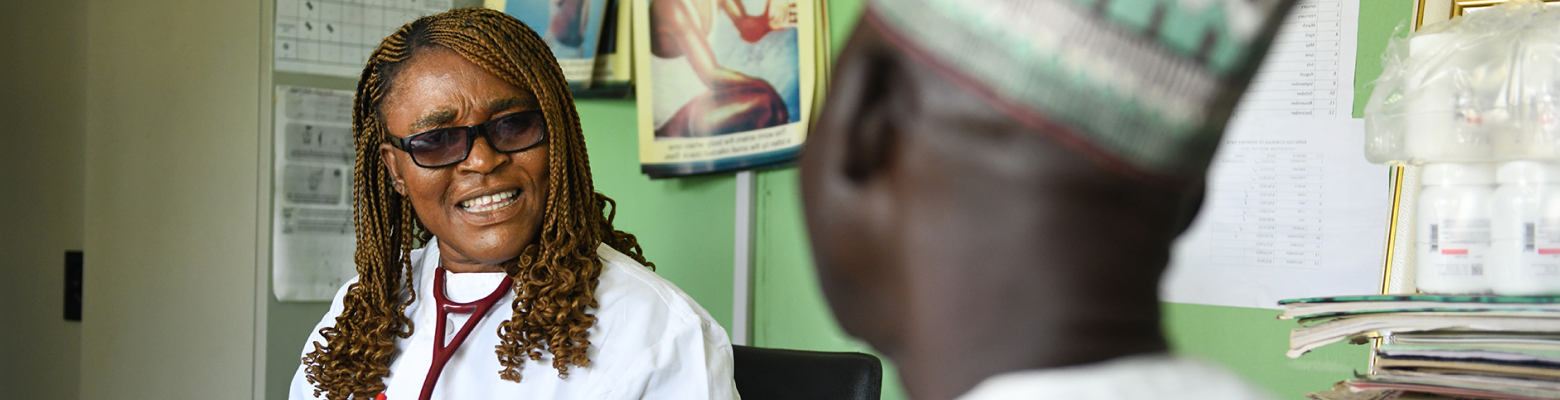
Banner Image of HIV Treatment
infoCredit: UNAIDSinfoCredit: UNAIDS
Result Area 2

HIV Treatment

HIV Prevention
HIV Treatment
Paediatric AIDS, Vertical Transmission
Community-led responses
Human Rights
Gender Equality
Young People
Fully funded HIV response
Integration and Social Protection
Humanitarian Settings and Pandemics

HIV Treatment

Overview
Joint Programme Results
Investments
Resources
Other Resources
Overview

Midway to the 2025 milestone set at the United Nations General Assembly in June 2021, the global HIV response has moved closer to the goal of ending AIDS as a public health threat by 2030, a commitment enshrined in the Sustainable Development Goals. Fewer people acquired HIV in 2023 than at any point since the late 1980s. Almost 31 million people were receiving lifesaving antiretroviral therapy in 2023, a public health success that has reduced the numbers of AIDS-related deaths to their lowest level since the peak in 2004. In sub-Saharan Africa, these successes have led to a rebound in average life expectancy from 56.3 years in 2010 to 61.1 years in 2023.


The progress is highly uneven, however. The global HIV response is moving at two speeds: relatively swiftly in sub-Saharan Africa, but hesitantly across the rest of the world. The numbers of people acquiring HIV are rising in at least 28 countries, some of which already have substantial epidemics. Many HIV programmes still neglect people from key populations, exposing them to high risks of acquiring HIV. Programmes are also missing 9.3 million [7.4 million–10.8 million] people who need lifesaving treatment, with children and adolescents living with HIV especially lagging behind.
 

Progress towards 95-95-95 target
Expand
Source: AIDSinfo
close
Joint Programme Results

The Joint Programme's leadership, normative guidance and technical support helped sustain access to integrated HIV treatment, care and support services in 2025 for better health outcomes for people living with HIV. The Joint Programme worked with national, UN and civil society partners improve the availability, reach and affordability of services and accelerate adoption of updated clinical guidance for innovative approaches to treatment. Through the Secretariat’s efforts, the Joint Programme focused on increasing country resilience during the 2025 funding shifts to help protect access to HIV treatment services. A rapid stocktaking exercise across eastern and southern Africa identified system-wide risks to HIV service delivery, and informed government prioritization and resource reallocation decisions. Findings supported government prioritization and domestic resource reallocation decisions to protect recent gains in HIV responses, including in terms of treatment coverage. The Secretariat also continued to routinely generate and share strategic information on the access to HIV services and on ART coverage through the Global AIDS Monitoring system through modelling of incidence and mortality scenarios, which helped enable governments to respond more quickly to emerging treatment gaps.

With support from the Joint Programme, 40 countries updated and implemented their national recommendations on HIV testing, treatment and service delivery in 2025, including on multi-month dispensing of ART, first- and second-line antiretroviral therapy, and advanced HIV disease. In addition 125 countries reported using dolutegravir as the preferred first-line ART option for adults and adolescents as per WHO recommendations, representing a 108% increase from 2020.

New and updated normative guidance, such as the updated 2025 HIV clinical management recommendations, was developed and rapidly disseminated to optimize treatment programmes. WHO also released the updated Antiretrovirals in pregnancy research toolkit, presented at the 2025 International AIDS Society Conference in Kigali, Rwanda to support countries to accelerate the inclusion of pregnant and breastfeeding populations in clinical research. The Secretariat developed a Global Reference on HIV Literacy: An Adaptive Resource for Communities, Programmes and Policymakers to provide up-to-date knowledge and information to strengthen community demand and their knowledge of high-quality HIV treatment services. 

Through Joint Programme support, HIV testing was scaled up in priority countries to ensure effective linkage to treatment and care. The ILO’s Voluntary Counselling and HIV Testing for Workers (VCT@WORK) Initiative reached over two million workers across 13 high-burden countries, and enabled more than 1.4 million workers to voluntarily undergo HIV testing, and linking those testing positive to ART and care services. 

UNDP's partnership with the Global Fund delivered results across 58 countries, providing life-saving ART to 1.7 million people and supporting 56 000 pregnant women to access vertical transmission prevention services, while also enabling 122 000 people to successfully complete TB treatment. Integration of HIV with TB, nutrition and livelihood services further improved health outcomes. WFP reached more than 24 000 people along Mozambique's Beira transport corridor with HIV testing, prevention and nutrition screening services. In South Sudan, targeted nutrition assistance reached 1300 malnourished individuals living with HIV, TB and visceral leishmaniasis, directly improving treatment adherence. 

According to the UNHCR Annual Public Health survey for 2025, over 187 000 pregnant women in humanitarian settings were tested for HIV during antenatal care, and 20 861 individuals living with HIV were on ART by end of 2025 through UNHCR support. In South Sudan, UNHCR sustained HIV services across eight refugee camps, including through the expansion of the healthcare workforce to scale up testing, counselling and linkage to care. In Malaysia, refugees and asylum-seekers living with HIV also gained improved access to HIV treatment, adherence support and essential health services through UNHCR’s support to the national protection and public health follow-up mechanism.  
Joint Programme Specific Outputs
2.1 Strategic convening of scientists, communities and multisectoral stakeholders, including through international fora and expert reports, to ensure the most up-to-date evidence and innovations for HIV testing, treatment, care, support integrated services and develop normative, strategic and implementation guidance.
2.2 Provide policy, advocacy and technical support to countries to update/adopt and implement national policies and service delivery programmes aligned with the new global guidance for effective scaling up of quality HIV testing, treatment, care and integrated services including those for comorbidities and coinfections, and related access and update monitoring, and share good practices.

UBRAF Indicator Data

Select year
Investments
UNAIDS Investments in
close
height="500px" scrolling="no">

Resources

  • Reports
2025-Result-Area-2-report
Jun 2026
2025 Report: Result Area 2 HIV Treatment
RA2_Report
Jul 2025
2024 Report: Result Area 2 HIV Treatment
RA02-2022-2023
Nov 2024
2022-2023 Report: Result Area 2 HIV Treatment
PCB 54_ 2022-2023 PMR Executive Summary
Jun 2024
2022–2023 PMR Executive Summary
2022-2023 PMR Results Report
Jun 2024
2022-2023 PMR Results Report
2022 RA 02_EN_0
Jul 2023
2022 Report: Result Area 2 HIV Treatment
2022 PMR Executive Summary
Jun 2023
2022 PMR Executive Summary
2022 PMR Results Report
Jun 2023
2022 PMR Results Report

Other Resources

HIV treatment | UNAIDS
Equal access to cutting edge HIV prevention and treatment | UNAIDS
Universal Health Coverage (UHC) | UNAIDS
The Global Alliance to end AIDS in children | UNAIDS
Expanding the HIV response to drive broad-based health gains: Six country case studies | UNAIDS
Undetectable = untransmittable — Public health and HIV viral load suppression | UNAIDS
Understanding measures of progress towards the 95–95–95 HIV testing, treatment and viral suppression targets | UNAIDS
Logo of UNAIDS
  • X
  • Facebook
  • Instagram
  • YouTube

Copyright © 2024

UNAIDS

  • Report fraud, abuse, misconduct
  • Scam alert
  • Terms of use