The Joint Programme advanced gender equality and women's empowerment in 2025 by integrating gender-transformative actions across policies and health services, eliminating gender-based violence and providing care to survivors, and reinforcing societal enablers to create safe, equitable environments. The Joint Programme also helped strengthen accountability instruments, monitoring mechanisms and national capacity to ensure women and girls are not left behind in the HIV response.
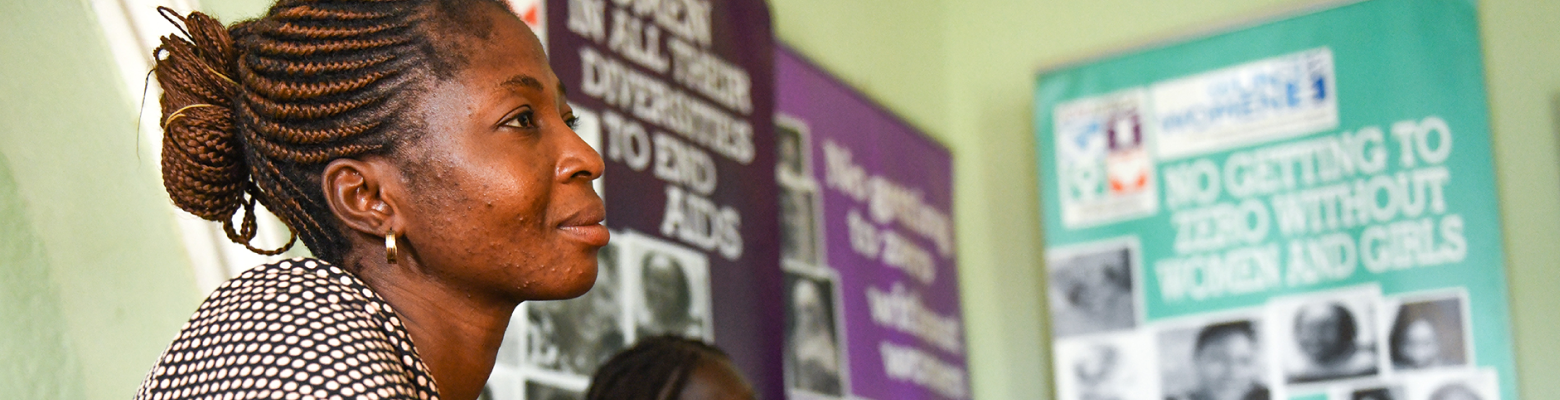
High-level advocacy initiatives helped drive the integration of gender equality in HIV and health programming. The Joint Programme worked closely with partners and countries in preparation for the 70th session of the Commission on the Status of Women (CSW70) in March 2026, to reaffirm the 2024 CSW Resolution 68/1 on Women, the Girl Child and HIV/AIDS while advocating for explicit references to women and girls living with or affected by HIV to be incorporated into the CSW70 Common African Position. The ATHENA Network, in collaboration with other networks and with Secretariat support, championed gender equality and HIV through the Women's Networking Zone at ICASA 2025. In the Philippines, the first National Summit on Women Living with HIV convened over 100 multistakeholder representatives, institutionalizing the leadership of women living with HIV in national dialogues.
Normative guidance and tools were updated to continue to strengthen gender-responsive programming. The revised Gender Assessment Tool for National HIV Response (GAT), now available in four UN languages, was piloted in six countries, producing costed action plans in three of these countries and informing national responses and preparations for the Global Fund Grant Cycle 8 applications in 2026. A multi-country Gender Equality, Disability and Social Inclusion assessment across five countries in Asia and the Pacific also informed country-specific action plans and a regional strategy. UN Women built national HIV programme capacity in 25 countries to integrate gender equality into HIV responses and Global Fund concept notes, while the Secretariat provided support to grassroots and national projects in 28 countries, which helped drive policy and normative reform, strengthened feminist advocacy and community-led action to shift negative social norms, and ultimately accelerated catalytic, sustainable results for gender equality and the HIV response.
Women's leadership and peer support were strengthened at country level. Over 5000 women and girls in Malawi, including women living with HIV, gained leadership and civic engagement skills, while 120 women leaders living with HIV in Nigeria gained greater capacity to drive advocacy on stigma reduction, healthcare access and economic empowerment. In India, UN Women's support to the HIV-Positive Women's Network across 13 states benefited over 20 000 women through education, entrepreneurship and civil leadership initiatives.
Gender-transformative HIV prevention was advanced through comprehensive sexuality education, positive masculinity initiatives and gender-based violence prevention programming. UNFPA institutionalized positive masculinity frameworks in five countries, while UNESCO reached over 2700 people through learning webinars on technology-facilitated gender-based violence. The Education Plus initiative helped drive policy reforms, enabling expanded secondary education access for an estimated 16 million adolescent girls and young women across seven sub-Saharan African countries. Survivor-centred services, referral pathways and health literacy on gender-based violence and women’s rights were reinforced, improving access to comprehensive support for women and girls affected by violence―including through community-led action in the Dominican Republic, Guatemala, Jamaica and Morocco. The UN Trust Fund to End Violence Against Women, managed by UN Women, resourced 19 civil society organizations through the disbursement of approximately US$ 871 600 in 2025, reaching over 3200 women living with HIV and other vulnerable women across 19 countries.