Logo of UNAIDS

Results and 
Transparency Portal

toggle

Main navigation

  • Home
  • Joint Programme
    • UNAIDS in Action
    • 2022-2026 UBRAF
    • UN Reform & the 2030 Agenda
  • Results
    • UNAIDS Results
    • Result Areas
    • Regions
    • Countries
    • Cosponsors
    • Performance Indicators
    • Secretariat
  • Resources and Investments
    • Resources and Investments
    • IATI
  • Donors
    • UNAIDS Resources Mobilization
    • UNAIDS Contributors
    • Evaluation, Audit and Risk Management
  • Documents Library
Search
Filter By:
Strategy/Framework/UN Reform/Reports
Result Area
Regions
Agency
Countries
Content Type
Year
Banner Image of  Community-led Responses
infoCredit: UNAIDSinfoCredit: UNAIDS
Result Area 4

Community-led responses

HIV Prevention
HIV Treatment
Paediatric AIDS, Vertical Transmission
Community-led responses
Human Rights
Gender Equality
Young People
Fully funded HIV response
Integration and Social Protection
Humanitarian Settings and Pandemics

Community-led responses

Overview
Joint Programme Results
Investments
Resources
Other Resources
Overview

The Global AIDS Strategy 2021–2026 reaffirmed that communities living with and affected by HIV are central to ending AIDS by 2030 and urged to expand role of communities to ensure more effective responses. Community-led HIV responses are vital for addressing stigma and discrimination; for outreach, prevention, treatment education and adherence support, differentiated and safe service delivery to reach and best meet the needs of all people who need them, especially the most vulnerable and marginalized.

Community-led organizations and networks are vital for national and global efforts to end AIDS as a public health threat. They bring the voices of and provide HIV and other health services and support for people living with HIV or at risk of HIV, especially women, youth and key populations who are not accessing essential services in public and private health systems. These organizations also bring critical insights and innovative approaches to improve HIV and other health services including for service delivery, community-led monitoring, identification of gaps as well as good practices and other people-centred solutions. They promote stronger accountability for effective HIV responses for impact.
 

Participation of community-led organizations
Expand
Source: Laws and Policies Analytics
close
Joint Programme Results

The Joint Programme continued to strengthen community-led HIV responses in 2025, advancing meaningful community engagement and leadership to ensure that communities are empowered to address the specific needs of people living with and affected by HIV. The Joint Programme’s support focused on sustaining regional coordination and rights-based advocacy, expanding community-led service delivery models in different settings and scaling up of evidence generation and communication initiatives to advance inclusive, stigma-free HIV services.

The UNAIDS Secretariat developed annexes to the HIV Response Sustainability Roadmap Part B: Companion guide, in consultation with community and civil society partners, which complemented guidance on sustainability and transition planning with rights-based, gender-transformative and community-led approaches. UNDP also worked with partners to strengthen meaningful community participation in HIV governance and financing, improving civil society and key population engagement in national dialogue platforms and Country Coordinating Mechanisms across multiple regions. The Power of Prevention initiative, launched in Malawi, South Africa and Zimbabwe, helped drive community-led advocacy for greater inclusion of HIV prevention for key populations in national policies and budgets.

Through Joint Programme support, community-led monitoring was advanced as a driver for strengthening national programme review processes, including through the introduction of a self-assessment tool, support for costing of community-led monitoring and documentation of its integration opportunities and avenues at country level. In Ukraine, community-led monitoring data was formally integrated into the work of the National TB and HIV/AIDS Council following UNDP and Secretariat support, to mobilize community leadership to gather data, define priorities such as community participation in governance, sustainable public financing, and inform legal and policy reforms. In Namibia, UN Women built community capacity to track availability of essential services such as ART provision, integrated HIV and gender-based violence services and family planning commodities across 109 facilities. In Latin America and the Caribbean, regional and national consultations engaged more than 90 organizations from over 25 countries to identify structural barriers to community systems integration.

Community-led service delivery approaches gained strength with Joint Programme support in 2025, improving outreach to underserved key populations with HIV, sexual and reproductive health, mental health and gender-based violence services. The UNAIDS Secretariat and partners provided support to 66 LGBTQI+-led organizations in 32 countries, resulting in strengthened capacities for human rights-focused community-led monitoring, and legal support and gender-based violence survivor assistance in 11 countries. Emergency support funds were also delivered to 43 LGBTQI+ groups facing human rights crises in the context of HIV. 

UNFPA, UNICEF and UNODC further reinforced community-led approaches across regions, including through adolescent-responsive and sexual and reproductive health programming in eastern and southern Africa to integrate HIV prevention and testing which reached millions; harm reduction outreach in Indonesia and Kenya; capacity building of community-based organizations in Afghanistan; and gender-responsive case management in Kyrgyzstan's women's prisons. UN Women provided support to communities of women and girls living with or affected by HIV in 22 countries. Support provided included the training of commune councillors and village leaders in Cambodia on feminism, positive masculinity and women's rights to better deliver gender-responsive support to women living with HIV. Furthermore, UNICEF helped to strengthen data-driven strategies that prioritized adolescent girls and young women, ensuring that communities were empowered to lead advocacy and social accountability efforts, implement anti-discrimination campaigns and shift harmful social and gender norms.

Joint Programme Specific Outputs
4.1 Develop and promote normative guidance and support advocacy strategies for community-led responses (network strengthening, legal literacy, advocacy, monitoring and service delivery), including those led by people living with HIV, key populations, women and youth
4.2 Provide technical and policy support to countries to develop and expand partnerships between governments and community-led organizations and provide support for greater engagement of networks in decision-making for community led responses for HIV, including on funding.

UBRAF Indicator Data

Select year
Investments
UNAIDS Investments in
close
height="500px" scrolling="no">

Resources

  • Reports
  • Infographics
2025-Result-Area-4-report
Jun 2026
2025 Report: Result Area 4 Community-led Responses
RA4_Report
Jul 2025
2024 Report: Result Area 4 Community-led Responses
RA04-2022-2023
Nov 2024
2022-2023 Report: Result Area 4 Community-led responses
PCB 54_ 2022-2023 PMR Executive Summary
Jun 2024
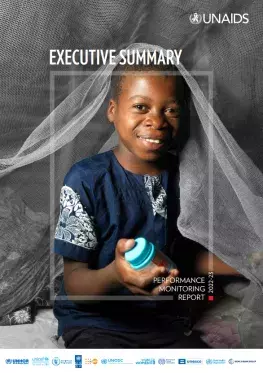
2022–2023 PMR Executive Summary
2022-2023 PMR Results Report
Jun 2024
2022-2023 PMR Results Report
2022 RA 04_EN_0.pdf
Jul 2023
2022 Report: Result Area 4 Community-led responses
2022 PMR Executive Summary
Jun 2023
2022 PMR Executive Summary
2022 PMR Results Report
Jun 2023
2022 PMR Results Report
2024_Infographic-UNAIDS-with-and-for-Communities
Jan 2026
UNAIDS with and for Communities (2024 Results)
Community-Response_2024
Nov 2024
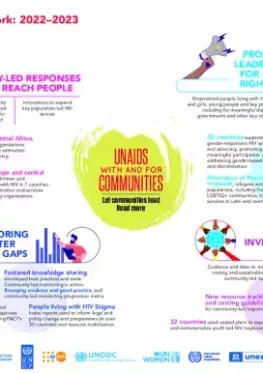
Community-led Response (2022-2023)
Infographic Community Response - 2020-21 PMR
Oct 2022
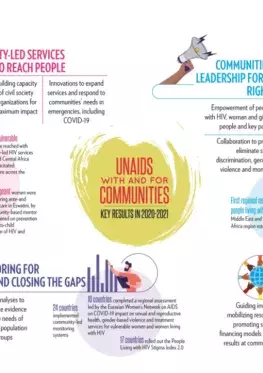
Community-led Response (2020-2021)

Other Resources

Community responses to HIV | UNAIDS
Community-led monitoring in action: Emerging evidence and good practice | UNAIDS
Ahead of World AIDS Day UNAIDS is calling for urgent support to Let Communities Lead in the fight to end AIDS | UNAIDS
Community pandemic response | UNAIDS
Logo of UNAIDS
  • X
  • Facebook
  • Instagram
  • YouTube

Copyright © 2024

UNAIDS

  • Report fraud, abuse, misconduct
  • Scam alert
  • Terms of use